

Since Chat GPT exploded into our lives three years ago, AI has been just about everyone’s favorite topic, all the time. In business and our personal lives people are using it to create recipes, write resignation letters, create business plans and even train their dogs. It’s being applied to just about everything.
And it doesn’t matter which flavor of Large Language Model (LLM) you prefer (Chat GPT, Claude, Google’s Notebook LM, etc.) the results have been transformative, enabling us to work faster, easier, better to find information and organize it more effectively than ever before.
So, can it help us find our next fossil?
You bet.
I think…
How Ai can Help you Find Fossils in your Area: 8 Al prompts you can use to find fossils where you live
In my own area here’s how I used Chat GPT (or you can use Claude, Notebook LM or Microsoft’s Co-Pilot) to find potential sites to fill my Summer local dig schedule. Think of your research using Chat GPT as a conversation with a knowledgeable local expert. Tailor your prompts to fit your needs and your description of the areas you wish to explore. Each prompt follows the one before it and you can always ask for more detail about an answer, summaries or pose follow-up questions. When you’re finished, you’ll have a string of questions and answers that should give you everything you need to plan your local upcoming fossil digs.
Here’s the prompts I suggest you start with (modify them to fit your needs):
Prompt 1: What is the geology of (Insert Your Town’s Name) and surrounding area?
Prompt 2: Where are the Paleozoic Sedimentary Rocks ((Insert Your Town’s Name & Southward)?
Prompt 3: Can you give specific locations with park or street names for sedimentary deposits in (Insert Your Town’s Name?
Prompt4: What kinds of fossils can be found in each of those locations?
Prompt 5: What are recommended online resources that would be helpful when planning and executing fossil digs in the local area?
Prompt 6: Where can I go online to find good maps of the area?
Prompt 7: Where can I go online to find good geological maps of the area?
AI-enabled fossil hunting in action: What Chat GPT told me about finding fossils in Belleville
Here’s the answers I got when I used those prompts in Chat GPT to find likely areas to dig in my town of Belleville, Ontario. The results are really helpful to me since we’ve only lived in Belleville for a few years (the fossil hunting depicted in my Time Eater novel takes place in my former hunting ground of Toronto.)
Belleville is a town of 57,000 people. Small. Small enough that you’ll never have to suffer through a traffic jam or a 90-minute drive to get to work. But big enough to have everything you need in a city readily at hand.
The town was founded in the early 1800s in the spot where the Moira River flows into the Quinte Bay on Lake Ontario creating a natural harbor that made the location great for transporting timber, minerals and crops from further inland. Those same waterways that made this a shipping hub and great place to found a city also make it a likely spot for finding fossils.
AI suggestions for likely places to find fossils in Belleville
Here are my actual results when I queried Chat GPT about where to hunt for fossils in Belleville:
Prompt 1: What is the geology of Belleville, Ontario and surrounding area?
The geology of Belleville, Ontario, and its surrounding area is characterized by a mix of Precambrian Shield rocks, Paleozoic sedimentary formations, and glacial deposits. Here’s a breakdown of the key geological features:
1. Canadian Shield Influence (North of Belleville)
- Precambrian Rocks: North of Belleville, particularly in areas like Tweed and Bancroft, you enter the Canadian Shield, composed of ancient igneous and metamorphic rocks that are over 1 billion years old.
- Granite, Gneiss, and Marble: This region has rich mineral deposits, including marble, quartz, and feldspar, which have been historically mined.
- Bancroft Area: Known as “Canada’s Mineral Capital,” Bancroft has a diverse range of minerals, including apatite, fluorite, and mica.
2. Paleozoic Sedimentary Rocks (Belleville & Southward)
- Belleville sits on a platform of Ordovician and Silurian sedimentary rocks, formed around 450-420 million years ago when this region was covered by a shallow tropical sea.
- Limestone & Dolostone: The area contains extensive limestone and dolostone formations, visible in quarries and road cuts.
- Fossils: The limestone in the region often contains well-preserved fossils of marine life like trilobites, corals, and brachiopods.
3. Glacial Influence & Surface Deposits
- Glacial Till & Sand Deposits: The area was heavily shaped by the last Ice Age (~12,000 years ago), leaving behind glacial till, eskers, and drumlins.
- Bay of Quinte Influence: Post-glacial flooding from Lake Iroquois (a predecessor to Lake Ontario) left behind sand and clay-rich deposits, influencing the soils found near the Bay of Quinte.
- Prince Edward County: The famous “Alvar” landscapes in places like Sandbanks Provincial Park are a result of thin limestone soils over bedrock, creating rare habitats.
4. Groundwater & Karst Features
- The limestone formations around Belleville can develop karst topography, including sinkholes and underground drainage systems.
- Groundwater in these limestone formations can be hard (rich in calcium and magnesium) due to limestone dissolution.
Economic & Geological Importance
- Quarrying: Limestone is extracted for construction and aggregate materials.
- Mineral Resources: The Canadian Shield to the north has historically been mined for minerals.
- Geological Tourism: Areas like Bancroft attract rockhounds and geologists for mineral collecting.
Summary
Belleville sits at the transition between the ancient hard rocks of the Canadian Shield to the north and the softer, fossil-rich limestone of the Paleozoic lowlands to the south, with significant influence from glacial activity. The region’s geology supports industries like quarrying, agriculture (due to fertile glacial soils), and tourism related to mineral collecting.
Would you like more details on a specific geological aspect of the area?
Prompt 2: Where are the Paleozoic Sedimentary Rocks (Belleville & Southward)?
The Paleozoic sedimentary rocks found in Belleville and southward primarily belong to the Ordovician and Silurian periods (about 450-420 million years ago). These sedimentary formations cover much of southern Ontario and are particularly well-exposed along road cuts, quarries, and the shores of Lake Ontario and the Bay of Quinte.
Key Locations of Paleozoic Sedimentary Rocks in the Belleville Region:
1. Belleville & Bay of Quinte Area
- The bedrock underlying Belleville and much of the Bay of Quinte region is primarily composed of Ordovician limestone and dolostone.
- This limestone is part of the Black River and Trenton Groups, which formed in warm, shallow seas.
- Fossils of trilobites, brachiopods, corals, and crinoids can often be found in these rocks.
2. Prince Edward County
- Much of Prince Edward County, south of Belleville, sits on a limestone alvar landscape, where thin soils overlie flat Paleozoic bedrock.
- The famous Sandbanks Provincial Park is built on glacial sands that overlay Paleozoic limestone.
- The area is part of the Trenton Group, with visible limestone formations along the shoreline.
3. Napanee & Shannonville Area
- The area west of Belleville, near Napanee, has extensive Ordovician limestone exposures, some of which are quarried for building materials and aggregates.
- The region around Shannonville contains some dolostone formations, which are slightly harder and more resistant to erosion than limestone.
4. Northumberland County & Brighton
- Moving eastward from Belleville toward Brighton and Colborne, the limestone bedrock continues with scattered exposures along road cuts and in quarries.
- The Presqu’ile Provincial Park area is underlain by Ordovician limestone, with glacial deposits covering much of it.
5. Kingston & Surrounding Area
- Further east toward Kingston, the Ordovician limestone continues to dominate, forming the foundation of much of the city.
- This area is also famous for limestone heritage buildings, using locally quarried stone.
- The Thousand Islands region contains exposures of both Paleozoic sedimentary rocks and the older Canadian Shield rocks.
Geological Boundaries
- To the north of Belleville, the Paleozoic limestone formations transition into the Precambrian rocks of the Canadian Shield near Tweed and Bancroft.
- To the south, these sedimentary rocks dip gently under Lake Ontario, forming part of the Great Lakes basin.
Economic & Scientific Importance
- Quarrying: These Paleozoic rocks are widely quarried for cement, road aggregates, and building materials.
- Groundwater Resources: The porous nature of limestone influences water quality and karst formations in the area.
- Fossil Sites: Several road cuts and natural exposures in the region contain well-preserved Ordovician fossils.
Would you like information on specific geological sites, such as fossil-collecting locations or notable quarries?
Prompt 3: Can you give specific locations with park or street names for sedimentary deposits in Belleville?
Belleville, Ontario, sedimentary rock exposures, primarily Ordovician limestone, can be observed at several accessible locations. re are some specific spots where these geological features are visible:
1. Riverside Park
- Location: Alo Moira River, near Station Street and Cannifton Road.
- Description: The park features natural outcrops of limestone along the riverbanks, offering a clear view of the sedimentary layers.
2. East Bayshore Area
- Location: Near Myers Pier, at the end of South Front Street.
- Description: Investigations have identified sedimentary formations in this area, particularly around the waterfront. (bqrap.ca)
3. Bell Boulevard
- Location: Between North Front Street and Sidney Street.
- Description: Road cut and construction this along this corridor have exposed limestone bedrock, providing visible sections of sedimentary deposits. (belleville.ca)
4. Sidney Street and College Street intersection
- Lotion: The junction of Sidney Street and College Street.
- Description: Infrastructure projects in this area he revealed sedimentary rock layers, particularly during excavation activities. (belleville.ca)
5. Loyalist Heights Area
- Location: Near *Loyalist Parkway and Sandy Hook Road.
- Description: Environmental studies in this vicinity have documented limestone formations, especially in areas adjacent to the Millennium Trail. (thecounty.ca)
These locations offer accessible views of Belleville’s sedimentary geology, showcasing the region’s rich geological history.
Prompt 4: what kinds of fossils can be found in each of those locations?
In the Belleville area, several locations offer opportunities to observe fossils from the Ordovician period, approximately 450 million years ago. Here’s an overview of the types of fossils you might encounter at each site:
1. Riverside Park
Location: Along the Moira River, near Station Street and Cannifton Road.
Potential Fossils:
- Trilobites: Extinct marine arthropods with segmented bodies.
- Brachiopods: Marine organisms with hard “valves” (shells) on the upper and lower surfaces.
- Crinoids: Also known as sea lilies; characterized by their long, stem-like structures.
Exploring the riverbed and exposed rock surfaces in this area may reveal these fossils. Local accounts mention fossil hunting as a popular activity along the Moira River.
2. East Bayshore Area
Location: Near Meyers Pier, at the end of South Front Street.
Potential Fossils:
- Corals: Ancient marine corals that formed reef-like structures.
- Bryozoans: Colonial organisms that often appear as intricate, lace-like patterns on rocks.
- Gastropods: Snail-like fossils with coiled shells.
The exposed bedrock along the waterfront in this area can reveal a variety of marine fossils from the Ordovician seas.
Source: quintemuseum.ca
3. Bell Boulevard
Location: Between North Front Street and Sidney Street.
Potential Fossils:
- Cephalopods: Ancient relatives of squids and octopuses, often with elongated, chambered shells.
- Trilobites: Distinctive three-lobed, segmented marine arthropods commonly found in Ordovician rock layers.
Construction sites and road cuts along Bell Boulevard have exposed limestone bedrock where such fossils may be discovered.
Source: quintemuseum.ca
4. Sidney Street and College Street Intersection
Location: The junction of Sidney Street and College Street.
Potential Fossils:
- Brachiopods: Shellfish with two unequal shells, commonly found in marine sediments.
- Crinoids: Look for stem segments that resemble small discs or beads.
Excavation and development in this area have uncovered sedimentary rock layers containing fossil material.
Source: quintemuseum.ca
5. Loyalist Heights Area
Location: Near Loyalist Parkway and Sandy Hook Road.
Potential Fossils:
- Trilobites: Noted for their distinctive three-part body and exoskeleton.
- Brachiopods: Common in regional limestone deposits.
The Millennium Trail and nearby green spaces have exposed limestone outcrops where these fossils can be observed.
Source: quintemuseum.ca
Fossil Hunting Etiquette
Before collecting fossils, always ensure you have permission, especially on private or protected land. Familiarize yourself with local rules and regulations to protect these valuable natural resources for future generations.
Prompt 5: What are recommended online resources that would be helpful when planning and executing fossil digs in the local area?
Recommended Online Resources
Exploring the geology and fossil heritage of the Belleville area is both educational and fun. Here are some online resources to expand your knowledge:
- Local Fossil Hunting Guide
- “Digging Deeper: A Fossil Hunter’s Guide to the Bay of Quinte Region” – A local guide detailing fossil sites and species found around Belleville.
Visit Website
- “Digging Deeper: A Fossil Hunter’s Guide to the Bay of Quinte Region” – A local guide detailing fossil sites and species found around Belleville.
- Regional Geological Data
- Mindat.org – Offers detailed geological and mineralogical data for the Belleville area, including fossil localities.
mindat.org
- Mindat.org – Offers detailed geological and mineralogical data for the Belleville area, including fossil localities.
- Fossil Collecting Tips
- Creation Research Museum of Ontario – Practical guidance on fossil hunting, cleaning, and identification.
creationresearchontario.com
- Creation Research Museum of Ontario – Practical guidance on fossil hunting, cleaning, and identification.
- Top Fossil Sites in Ontario
- Cottage Life – An article listing Ontario’s best fossil hunting spots, some within reach of Belleville.
cottagelife.com
- Cottage Life – An article listing Ontario’s best fossil hunting spots, some within reach of Belleville.
- Community Fossil Forums
- The Fossil Forum – Join a community of fossil hunters sharing tips, photos, and experiences.
thefossilforum.com
- The Fossil Forum – Join a community of fossil hunters sharing tips, photos, and experiences.
- University Resources
- Earth Sciences Museum, University of Waterloo – Educational content focused on Paleozoic fossils and Ontario’s geological history.
uwaterloo.ca
- Earth Sciences Museum, University of Waterloo – Educational content focused on Paleozoic fossils and Ontario’s geological history.
- Conservation Areas
- Rock Glen Conservation Area – Known for its fossil-rich deposits and on-site museum. A great destination for hands-on fossil exploration.
Rock Glen on Wikipedia
- Rock Glen Conservation Area – Known for its fossil-rich deposits and on-site museum. A great destination for hands-on fossil exploration.
- Local Attractions
- Princess Sodalite Mine Rock Shop (Bancroft) – Offers rocks, minerals, and fossils for sale, plus educational displays.
hastingscounty.com
- Princess Sodalite Mine Rock Shop (Bancroft) – Offers rocks, minerals, and fossils for sale, plus educational displays.
Bonus Resource:
Video – Exploring and Camping at Rock Point Provincial Park
For a visual overview of fossil-rich environments similar to those in the Belleville area, check out videos featuring fossil hunting adventures at Rock Point Provincial Park.
Prompt 6: Where can I go online to find good maps of the area
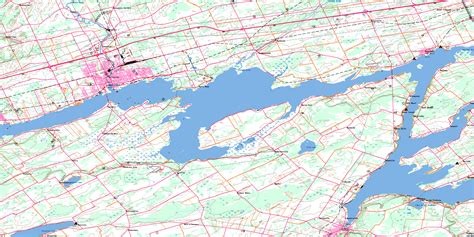
To explore detailed maps of Belleville, Ontario, and its geological features, consider the following online resources:
1. Ontario Geological Survey (OGS) Publications
–Geological Series: Paleozoic Geology of the Belleville-Wellington Area*: This publication includes detailed geological maps at a:50,000 scale, focung on the Paleozoic geology of the Belleville gion. (geologyontario.mndm.gov.on.ca)
- GeologyOntario**- GeologyOntario: A comprehensive database offering access to various geological maps and data for Ontario. You can search for maps specific to the Belleville area. (geologyontario.mndm.gon.ca)
3. Natural Resources Canada
- Atlas of Canada – Explore Our Maps: Provides a range of interactive maps, including topological and topographical maps that cover the Belleville region.
4. Quinte Museum
- Digging Deeper: A Fossil Hunter’s Guide to the B of Quinte Region: Offers insights into local geology and fossil locations, complete with maps highlighting key areas of interest around Belleville(Quintemuseum.ca](https://quintemuseum.ca/digging-deeper-a-fossils-hunters-guide-to-the-bay-of-quinte-region/?utm_source=chatgpt.com))
- Central Archives of Belleville and Hastings County**
- Geological Maps of Hastings and Surrounding Counties: A collection of geological maps detailing the Precambrian, Quaternary, and Paleozoic geology of the region, including Belleville. (discover.cabhc.ca)
These resources should provide comprehensive mapping information to support your exploration of Belleville’s geology and fossil sites.
Prompt 7: Where can I go online to find good geological maps of the area
To explore detailed geological maps of the Belleville, Ontario area, consider the following online resources:
1. Ontario Geological Survey (OGS) Publications
Geological Series: Paleozoic Geology of the Belleville-Wellington Area: This publication provides detailed geological maps at 1:50,000 scale, focusing on the Paleozoic geology of the Belleville region. (geologyontario.mndm.gov.on.ca) 2. GeologyOntario
- GeologyOntario: A comprehensive database offering access to various geological maps and data for Ontario. You can search for maps specific to the Belleville area. (geologyontario.mndm.gov.on.ca)
3. OGSEarth
- OGSEarth: An interactive platform that allows users to view and download geological data using applications like Google Earth. It provides access to bedrock and surficial geology maps, mineral deposits, and more.
4. Natural Resources Canada
- Geological Map of Canada: Offers a range of interactive maps, including geological and graphical maps that cover the Belleville region.
5. Central Archives of Belleville and Hastings County
- Map of Ontario Geology and Principal Minerals: A double-sided map detailing the geology and principal minerals of Ontario, including the Belleville area. (discover.cabhc.ca)
These resources should provide comprehensive mapping information to support your exploration of Belleville’s geology and fossil sites.
Stay tuned to see if the AI experiment worked
As the weather warms, and fossil hunting season reopens here in the north land I’m planning to test my Chat GPT results by visiting the sites suggested by the AI and seeing what I can find. You can subscribe to this blog to receive notifications of future blog updates on how things went.