Where to Find Fossils in your Area

The Time Eater novel, available now in paperback and eBook on Amazon

eBook at Indigo, Kobo and Barnes & Noble
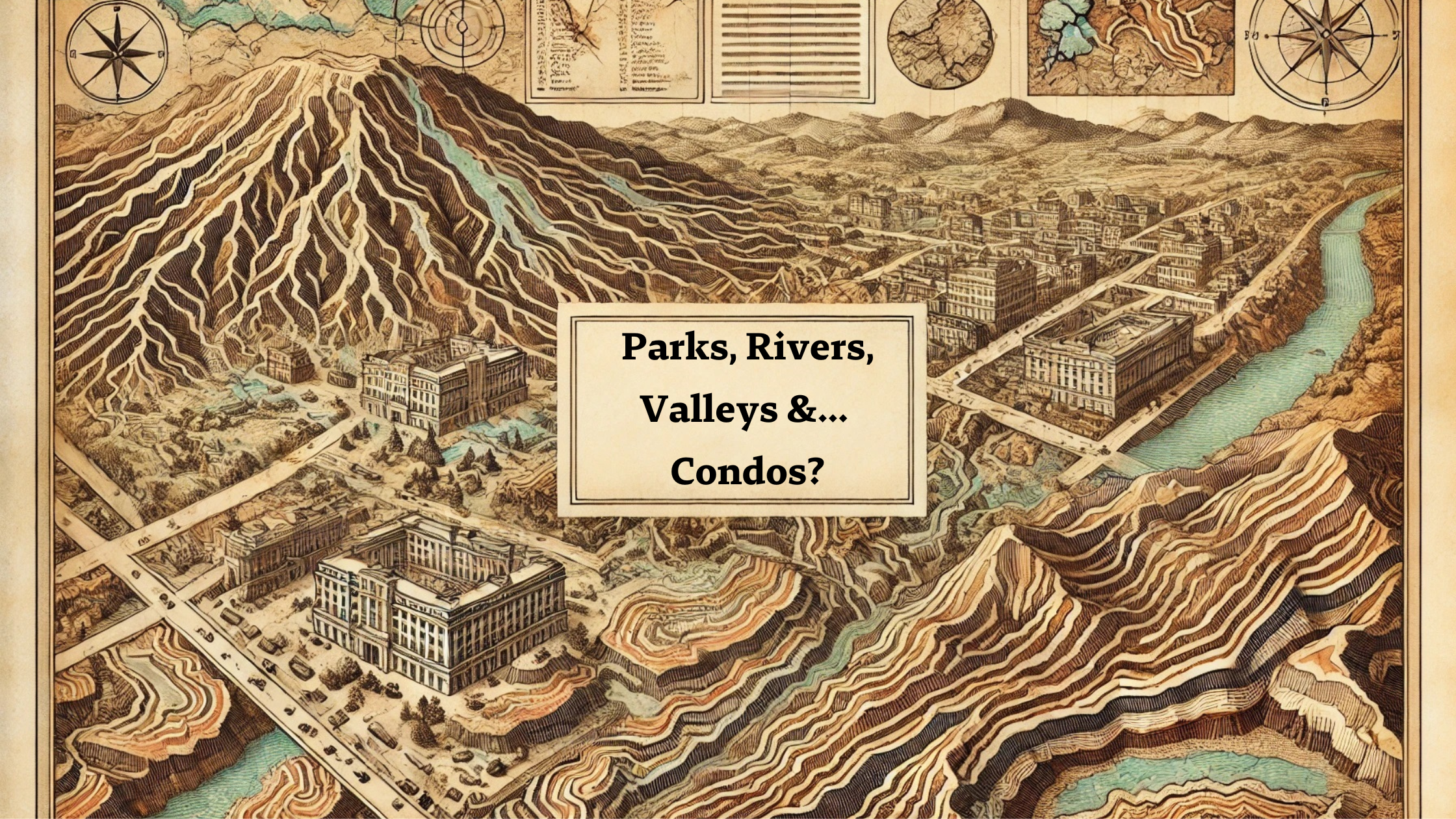
Geologic Map of Fossil Hunting Locations

Fossil hunting in the city (Paleontology in the park)

Even if you live in a big city you can still find good fossil hunting sites

I spent my childhood sitting in the dirt. Under a hot sun. Beside or sometimes shin-deep in a creek or shallow river. Turning over rocks, splitting stones—hunting for fossils.

In Toronto that meant heading out into the river valleys that carve up the urban landscape. Waterways like the Humber, the Don, the Etobicoke or Mimico creeks.

Those were some of my favorite days, no question. Accompanied by friends. Unearthing treasure troves of Trilobites, ferns and Ammonites, and often something larger.

The thrill of a great find, of rushing home with it in my bag, was electric. I couldn’t wait to clean it and identify it—preserve it as part of my collection.

That’s where my passion for fossil hunting began.

And now, years later, we’ve moved out of the city to a smaller community to the east. It’s still on Lake Ontario and it has much the same geology. But now I’m faced with a pressing question:

I’m sitting at home wanting to go on a dig, but I don’t know where. What kinds of places in my local area would be the best spots to look for fossils? Which areas have geological conditions that are likely to have preserved fossils? Which ones are easily accessible?

This article will give you some insights into what types of places are target-rich environments if you’re looking for fossils and what kinds of sites in your area you should check out first if you’re heading out on a dig.

Where to Find Fossils: A Guide to the Best Locations

Whether you’re an amateur enthusiast or a seasoned paleontologist, knowing where to look is essential. Here are some of the best types of places to find fossils, along with tips to enhance your search.

Sedimentary Rock Formations

What is sedimentary rock?

Sedimentary rock forms when small pieces of other rocks, minerals, and sometimes organic matter settle in layers and harden over time. Really long periods of time—like anywhere from thousands to millions of years. Sedimentary rock forms slowly as layers of sediment are deposited, compacted, and then cemented together over long periods. For example, in a river or lake, sediments might start settling in a matter of years or decades, but turning those loose layers into solid rock usually takes much longer. Often, environmental factors like climate, water chemistry, and the amount of sediment available can speed up or slow down the process.

These bits, known as sediments, come from weathering and erosion. Once they are deposited—often by water, wind, or ice—they slowly compact and are cemented together by minerals that fill the gaps between the particles. Sandstone, limestone, and shale are common examples of sedimentary rocks. Often, these rocks display clear layers and often contain fossils, providing a history of past environments and life forms—and a perfect dig site for fossil hunters.

The great thing about sedimentary rock is that there are formations everywhere. Even in the middle of the busiest cities. Since they often form in and around water bodies—look for stream, creeks, rivers, ponds and lakes in your area..

Examples of sedimentary rock

Most fossils are found in sedimentary rocks, so look for areas with exposed layers of limestone, shale, or sandstone, as these often harbor preserved remains of plants and animals.

Limestone

Limestone is a type of sedimentary rock mainly made up of calcium carbonate. It often forms in shallow, warm marine waters where tiny sea creatures like shells and corals leave behind their remains. Over time, these remains pile up, compact, and cement together to form the rock. Limestone is widely used in construction, as a raw material for cement, and even in making lime for various industrial uses.

Shale

Shale is a sedimentary rock made mostly of clay and tiny silt particles. It forms in calm environments like deep lake beds or ocean floors where fine particles settle slowly. Over time, these particles compact and stick together, creating layers that can split apart easily. Shale is common and often holds clues about past environments, sometimes even storing oil or gas within its layers.

Sandstone

Sandstone is a sedimentary rock formed from grains of sand that are compacted and cemented together over time. These sand grains come from the weathering of other rocks. As they settle in layers, minerals like silica or calcite fill the gaps and bind the grains into a solid rock. Sandstone often shows clear layers and can have a range of colors depending on the minerals present. It’s widely used in construction and can be seen in many natural landscapes around the world.

Since sandstone often displays layers that reflect its formation conditions, looking at a sandstone formation is kind of like reading a landscape’s history, unveiling past environmental states.

What kinds of fossils can be found in sedimentary rock formations?

Limestone often contains fossils from ancient marine environments. You can find remains of shells, corals, and brachiopods, which were common in shallow seas. Some types of algae and tiny organisms like foraminifera are also preserved. These fossils help scientists understand the environment where the limestone formed, giving clues about ancient sea beds and the life that once lived there.
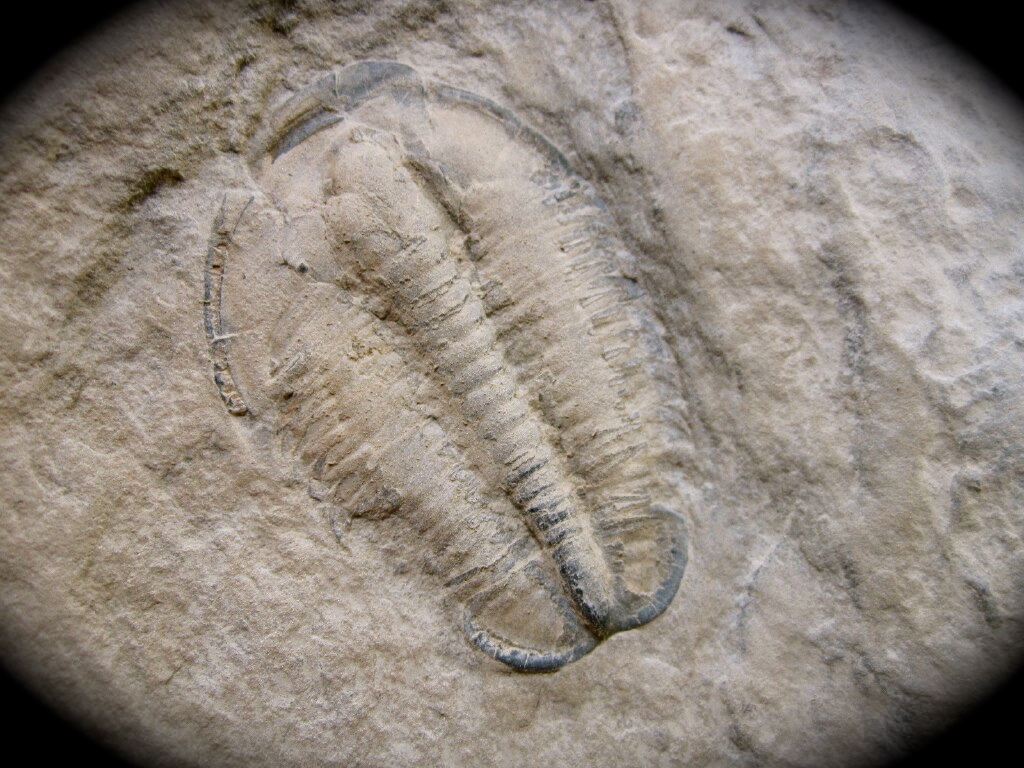
Fossil in Limestone

Shale often holds impressions of plants or small invertebrates. Shale can preserve a range of fossils thanks to its fine, layered structure. In marine shale, you might find small sea creatures such as trilobites, brachiopods, or mollusks. In some cases, graptolites or tiny invertebrates are well preserved. When shale forms in freshwater settings, plant remains or even insects might be found. The fine particles and low-energy environments help keep delicate structures intact, providing a clear snapshot of ancient life.

Fossil in Shale

Sandstone sometimes holds fossils, though it doesn’t always preserve them as well as other rocks like limestone. The most common fossils in sandstone are trace fossils. These include footprints, burrows, and other marks left by ancient animals. Sometimes, you might also find the harder parts of organisms, such as shells or bones, that managed to survive the process of cementation. If you’re lucky enough to have sandstone formations in your area, they will often provide clues about the behavior and movement of ancient life rather than detailed remains.

Fossils in Sandstone

Even if you live in a big city you can find fossils nearby

You may think that fossil hunting is something that happens out in the wilds, in remote sites that are far from the city and hard to access. But that’s not really the case. Even in the densest of cities it’s often possible to find little corners of fossil-friendly nature amongst the busy roads and soaring towers. You just have to know where to look.

Checking out local waterways is often the best place to start

Most towns and cities were built in a specific location because it has water access. Whether it’s ocean or sea front, on the shores of a lake or at the mouth of a river or creek it was chosen because the water gave people a way to move goods like lumber or crops that were needed for everyday use.

Lucky for us those same bodies of water are prime locations for finding exposed sedimentary rock beds and formations—which are the best places for fossil hunting.

Flowing water can erode sedimentary rock, revealing embedded fossils. Riverbeds, streams, and lake shores are excellent places to search, especially after storms or high water levels. These areas often yield smaller fossils like fish, amphibians, and plant material. Beaches, particularly those with cliffs made of sedimentary rock, can also yield treasures such as ammonites or trilobites. Lyme Regis in the UK, part of the Jurassic Coast, is a famous fossil hotspot. Flowing water can erode sedimentary rock, revealing embedded fossils.

Does your city have a lakefront or ocean beach? Perhaps there’s a river running through the middle of town or creeks and streams cut across the village. If so, those are some of the best places to start.

Etobicoke Creek fossil bed

Solid advice on finding fossils in your town

Given all of the above, I’d look for a stream, creek or river. And then walk it looking for one of those little rock beaches that tend to be uncovered at places where the waterway bends.

Look for flat slabs of grey black rock-that’s shale.

If you’re near a lake, go down to the shore and look for limestone outcroppings, which usually appear as big blocks of light grey stone often eroded into unique shapes.

Road Cuts and Construction Sites!!!

If you live in a city or town like most of us, there are unique opportunities to find fossils in the built-up environment—places you may not normally thing to look.

And that’s because, in most places, construction is a year-long endeavour. Something’s always being dug up.

And that opens up chances for us to make fossil finds that would have been otherwise hidden. New holes, dirt, soil and rock will be exposed. Layers of built-up sediment will be overturned.

This is your chance to make a new discovery.

But—always be careful. Construction sites are dangerous places. Don’t sneak into places where you’re not allowed or where there are risks.

While these areas might not be as extensive as natural formations, they can still yield surprising finds, including marine fossils, plant impressions, or small vertebrates. Be mindful of safety and regulations when exploring these areas. Newly exposed rock from road construction or excavation sites can reveal fossil-rich layers.

Watch when the city digs in your area and check out what gets temporarily exposed when they break ground. Keep in mind that every foot down they excavate is another leap back into our distant past.

While these areas might not be as extensive as natural formations, they can still yield surprising finds. Be mindful of safety and regulations when exploring these areas.

construction site for fossil dig

Wrap up

Now that I’m looking for new dig locations in my new town, I’ve started looking for likely shale deposits along the river that cuts through the center of the city, I’m checking out the land along the lake shore for limestone formations. And, of course, watching out for the unexpected opportunities sometimes created by new roadworks or excavations for a new building.

I’m creating my fossil hunting plan for the coming dig season and almost can’t wait. Armed this knowledge you can start building your own plan that should result in lots of new fossil finds and super rewarding summer.

Happy hunting!

New Fossil Hunting Podcast Review of The Time Eater

The Time Eater novel, available now in paperback and eBook on Amazon

eBook at Indigo, Kobo and Barnes & Noble

Image of The Time Eater Characters with a Prompt to Listen to the Fossil Hunter Podcast

Check out this podcast Review of book to find out what it’s all about and what the hosts of the episode thought.

The Time Eater Podcast Review: Listen Now

Coming Soon–The Time Eater Book Launch on Amazon, Kobo, Ingram Spark and Barnes & Noble!

This episode of the podcast is called: “The Time Eater” – A Paleontological Mystery

In this episode the two enthusiastic hosts review “The Time Eater” and get into what they think the book is about, its the key themes and plot points. They do a great job of capturing the essence of the book and provide a compelling introduction to anybody wondering if this is a great book for them.

What’s the book all about?

The book is an adventure mystery novel that centers around Foster Raymond, a young paleontologist who sets out on a quest to uncover the truth behind his grandfather’s suspicious death, why his last fossil dig logbook was stolen, and what the series of coded clues his grandfather left behind are pointing towards—while confronting a ruthless fossil thief known as the “Time Eater.”

What do the hosts of the podcast think of The Time Eater?

“The book is like Indiana Jones—but with Dinosaurs!”

  • Paleontology and Scientific Discovery in general are both exciting and potentially dangerous. The novel explores the competitive nature of the field, where the promise of fame and fortune can corrupt individuals and lead to conflict and betrayal. As one of the hosts said, “Remember, we’re talking about a world where these groundbreaking discoveries can lead to a lot of fame and fortune. And not everyone in that world plays by the rules.”
  • Family Secrets and Legacy: Foster’s journey is driven by a desire to uncover the truth behind his death. The buried fossil gear, the stolen notebook, and the cryptic clues all suggest a hidden history and family secrets—making for an exciting and suspenseful adventure.
  • The Importance of Fossil Preservation: The “Time Eater” is a villain who is destroying the fossil record for personal gain. As one host remarked, “Essentially, He’s robbing the scientific community of crucial discoveries.” Throughout, the book drive home the importance of protecting all fossil discoveries as connections to our collective history.  
  • Interconnectedness of Past and Present: The discoveries made by Foster challenge established scientific knowledge and invite readers to reconsider long-held views. The discovery of the “Crystal Garden” and other unusual finds shows how uncovering the past can reshape our present understanding. As one host put it, “Every new discovery has the potential to rewrite the textbooks, challenge all of our assumptions.”

The Time Eater” is not just a paleontology-based adventure but is also a novel about family secrets, personal growth, and the importance of scientific discovery and preservation. The story blends scientific intrigue with action and emotional depth. As the podcast hosts conclude, “the story of Foster Raymond and the time eater is a testament to the enduring power of curiosity, the thrill of discovery, and the importance of preserving our shared scientific heritage.”

To see what The Time Eater is like check out this free sample of the book’s beginning

–Andy Haynes

Find out more about Andy Haynes on LinkedIn and Instagram.

Rivers on Pluto—Lakes on the Edge of the Solar System.

pluto.jpg.size.xxlarge.letterbox

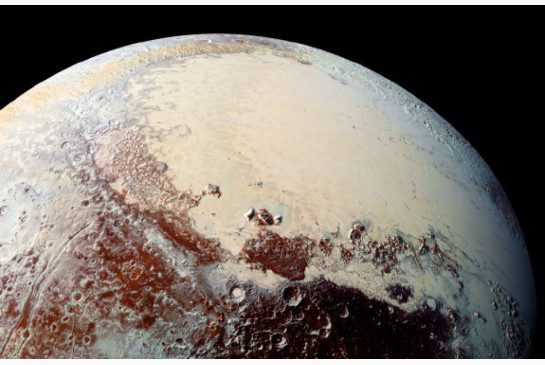
The neighborhood’s getting interesting again. Used to be we thought of Pluto as a cold, hard rock way out on the edge of the solar system. Dry, like an asteroid. But last year’s New Horizons probe is producing some shocking reveals as scientists pore through the data it sent back.

Starting with the possibility of running liquid on the surface at some point in the planetoid’s history. Yep, rivers and even lakes. Though not water—it’s still too cold for that. Instead, researchers believe Pluto may have once been home to bodies of liquid nitrogen.

And they suspect that the unexpected presence of hot and cold running nitrogen has something to do with the planetoid’s extreme axial tilt. Earth’s tilt sits at a relatively comfortable 23 degrees. Pluto, on the other hand, is canted over at a vertigo-inducing 120 degrees. And that means that it has large tropical zones. Places where it gets hot enough for nitrogen to thaw.

But it also has big arctic zones. And, in a weird twist, areas where the two zones overlap.

Check it out at:

http://www.thestar.com/news/world/2016/03/22/pluto-may-have-had-lakes-rivers-once-shocked-nasa-scientists-say.html

The Time Eater: A Foster Raymond Fossil Hunter Novel is available now in paperback and eBook at Amazon.ca and as an eBook at Indigo, Kobo and Barnes & Noble

Find out more about Andy Haynes on LinkedIn and Instagram.

The Martian – Well, A Good First Step, Anyway

spacemen1.jpg.size.xxlarge.letterbox

Yesterday, American Scott Kelly and Russian Mikhail Kornienko parachuted their Soyuz capsule back to Earth after 340 days on the International Space Station—a new NASA record. Spending almost a year in space is an early step in NASA’s longer term plan for sending astronauts to Mars. And that trip will take two and half years return—hell of a commute.

While orbiting in his tin can, Kelly experienced more than 10,000 sunrises and sunsets in less than a calendar year. He travelled more than 231 million kilometres.

Meanwhile back on Earth, his identical twin, Mark offered himself as a medical test subject so doctors can compare the effects of zero gravity, radiation, etc. on the two brothers.

Here’s to putting boots on mars in our lifetime!

BTW—apparently NASA is looking for volunteers for more 1 year missions.

http://www.thestar.com/news/world/2016/03/02/nasas-space-endurance-champ-savours-fresh-air-after-340-days-in-orbit.html


Find out more about Andy Haynes on LinkedIn and Instagram.

Earthquake Swarm!

si-earthquake-safety-leaflet

Not another bad sci-fi movie. Not a biblical prophecy. It’s real, and it’s hitting tiny New Brunswick town, McAdam, yet again.

In the past few weeks up to thirty small earthquakes have battered the town of just over 1200 people, located a couple of hours northwest of St. John. The quakes are strong enough to knock plates off shelves and break windows. And they’re hitting frequently enough that townspeople have felt as many as 20 in one night—making sleep difficult for many.

Thing is, this isn’t the first time McAdam has suffered such a swarm. Back in 2010 they were hit by a wave of earthquakes lasting fifty days. And then again, two years later, the tremors returned for ten more days.

They may not be large magnitude events, but the frequency has to make life in the small town interesting at best.

Check out the details here: http://www.cbc.ca/news/canada/new-brunswick/mcadam-earthquake-swarm-new-brunswick-1.3441895

Find out more about Andy Haynes on LinkedIn and Instagram.

RIP, Henry Worsley—Explorer Dies Attempting Solo Trek across Antarctica

henry-worsley.jpg.size.xxlarge.letterbox


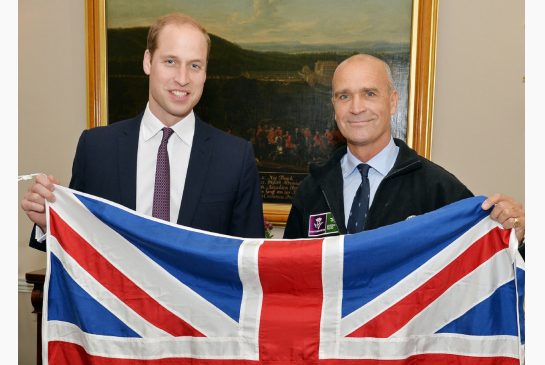
1600 km across the frozen wastes of Antarctica—to complete Ernest Shackleton’s failed lost expedition mission, and to raise money for wounded troops. And he almost made it. Just 48 km shy of the end of his trip, Henry Worsley’s body gave out—forcing him to call for help.

After 71 days alone on the ice, pulling his supplies on a sled, and suffering every step of the way, he finally succumbed.

Worlsey was an ancestor of Ernest Shackleton. Shackleton’s ship, The Endurance, had been trying to find a route across the Antarctic through the South Pole, but had been trapped by pack ice. In a desperate bid for survival, Shackleton successfully led his crew across the ice to the safety of a whaling station.

Worsley was attempting to complete that original mission and find a way across the barren continent. Unfortunately, after being airlifted to a hospital in Punta Arenas, Worsley’s body could take no more punishment. He passed away the next day.

Rest in Peace, one of the great explorer’s of our, or any time.

http://www.thestar.com/news/world/2016/01/25/british-explorer-henry-worsley-dies-on-solo-antarctic-trek.html

If you enjoy a good exploration and adventures in the wilds check out The Time Eater mystery/adventure novel.

Available in paperback and eBook on Amazon

Available as an eBook on Kobo and Barnes & Noble

Find out more about Andy Haynes on LinkedIn and Instagram.

And Then There Were Nine…Planets…Again

caltechresea

We kicked Pluto out of the happy planets club a decade ago, meaning the solar system’s active roster was down to just eight planets in the solar system. But now there’s a new member on the scene—dubbed Planet X.

On Jan. 20, Caltech scientists, Mike Brown and Konstantin Batygin, announced their discovery of evidence suggesting the evidence of a Neptune-sized planet out beyond the orbit of outcast Pluto. Evidence suggest it’s a gaseous ice giant that’s up to ten times the mass of the earth. And it’s orbiting so far beyond Pluto that it takes 10,000 years to orbit the sun

Brown and Batygin went looking for evidence of Planet X because something was pulling the orbits of recently discovered planetoids out past Pluto towards a common point near the plane of the solar system—something huge…

And of course, conspiracy theorists have wasting no time in announcing that the discovery of Planet X obviously portends the end of the world. Stay tuned for more on apocalypse times and dates in your local area.

The only thing left now is for someone to actually lay eyes on the elusive giant. Check out the details here:

https://www.washingtonpost.com/news/speaking-of-science/wp/2016/01/20/new-evidence-suggests-a-ninth-planet-lurking-at-the-edge-of-the-solar-system/


Find out more about Andy Haynes on LinkedIn and Instagram.

Nicolas Cage and the Case of the Stolen Dinosaur Fossil

3500

Andy Haynes

Movie Stars and Stolen Dinosaurs—Update

Eight years after purchasing a Tyrannosaurus bataar skull from L.A. art gallery, I.M. Chait, actor Nicholas Cage has returned the stolen find to its native Mongolia.

Cage outbid fellow star and fossil buff, Leonardo DiCaprio for the skull back in 2007, paying $276,000. Cage received a certificate of authenticity from the gallery, and, at the time, all seemed cool.

But then the Department of Homeland Security came knocking. And suspicions were raised that perhaps the skull had connections to infamous fossil thief, Eric Prokopi—who has since served a stretch in the big house for the theft of another Tyrannosaurus bataar skeleton from Mongolia.

Once he was advised of that his bataar had been illegally smuggled out of Mongolia Cage agreed to give it back to its country of origin.

Way to do the right thing, Mr. Cage!

Check out the details here:

http://www.theguardian.com/film/2015/dec/22/nicolas-cage-returns-stolen-mongolian-dinosaur-skull-he-bought-at-gallery

The Time Eater: A Foster Raymond Fossil Hunter Novel is available now in paperback and eBook at Amazon.ca and as an eBook at Indigo, Kobo and Barnes & Noble

Find out more about Andy Haynes on LinkedIn and Instagram.

SpaceX Sticks the Landing!

1415612620038195492


Perfect ten’s from all the judges—last night SpaceX’s Falcon 9 rocket made its first successful vertical landing on a pad in Cape Canaveral.

Why it’s important

This wasn’t just a demo flight. No mere test. The Falcon 9 took off for space with a payload of 11 communication satellites to be launched into orbit. Two minutes in the flight, stage one separated, turned itself around and returned to land safely on the pad at the Cape, while the upper stage continued on to successfully deliver it’s payload into orbit 800km above the Earth.

SpaceX founder, billionaire Elon Musk, says the capability to land and reuse the booster rockets will significantly reduce the cost of space flight.

Perhaps we have just witnessed the inciting incident that will kick off the great age of commercial space flight promised for so long.

Well done, all!

Check out the details at:

http://www.theglobeandmail.com/news/world/spacex-successfully-lands-rocket-six-months-after-devastating-accident/article27900594/

A005_C008_1221PL

Find out more about Andy Haynes on LinkedIn and Instagram.

The State of Private Space Flight—How we Used to View Elon Musk

542114512


Good news—private, corporate space flight company Orbital ATK successfully docked their spacecraft with the international space station last month. Good news—Amazon founder, Jeff Bezos’ New Shepard spacecraft managed to land itself on a launch pad in recent weeks.

Not so great? Elon Musk’s SpaceX craft has been grounded since it exploded during what Musk called a ‘rapid, unscheduled disassembly’ while attempting a landing earlier this year. But the Falcon 9 rocket has been updated, and now sits on a Cape Canaveral pad awaiting launch tomorrow night.

So maybe NASA’s not up to as much as it once was. But, given the strides countries like China and India have made in the last year—and the progress made by private interests…it may be that our dreams of a future in space are more realistic than ever before.

That’s all good news to me.

For more, check out: http://news.nationalpost.com/news/spacex-scheduled-to-return-to-flight-sunday-and-attempt-another-dramatic-landing-this-time-on-land

Find out more about Andy Haynes on LinkedIn and Instagram.